.png)
Two Years Later, Western North Carolina Is Still Healing From Helene

Updated: 4 days ago
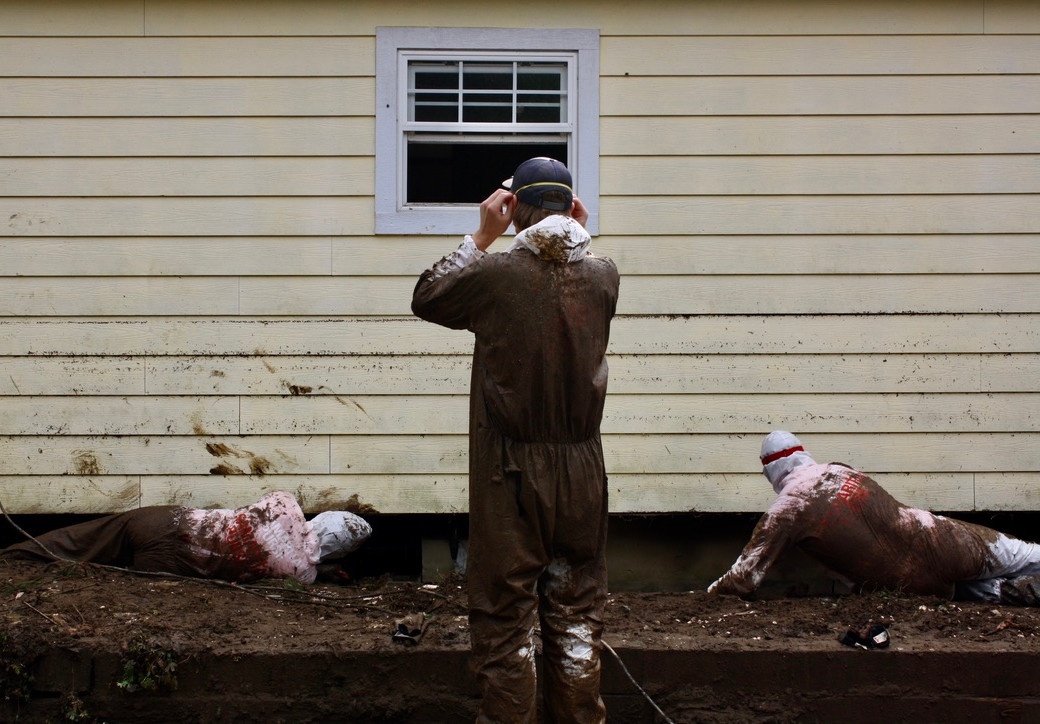
On October 1, 2024, a Samaritan's Purse volunteer takes a break from removing damaged insulation in a house that was flooded during Hurricane Helene. “Because of Samaritan's Purse and some local contractors, some people have been able to gain access to their homes,” said Wesley Smith, chairman of the Watauga Long Term Recovery Group. “Samaritan’s Purse continues to be active in rebuilding.” Photo Credits: Selah Greer
Selah Greer, Editor of The Spark
This Sunday, September 27, will mark two years since Hurricane Helene wreaked havoc across Western North Carolina.
Over two years since the waters receded, the High Country has worked tirelessly toward recovery - clearing debris, repairing roads and bridges, and rebuilding homes. Thousands of hours of volunteer effort and billions of dollars have been poured into the area, and though significant progress has been made, recovery is still ongoing.
The Governor's Recovery Office for Western North Carolina (GROW NC) is one such agency working to address the continued impact of Hurricane Helene. GROW NC was established by Governor Josh Stein to coordinate state-wide recovery effort. Since its inception, the office has provided crucial coordination between state, local, and federal agencies to streamline recovery and ensure survivors have access to the resources by advocating for funding and creating programs.
Dr. Scott Elliott, the deputy director of engagement for the Governor's Recovery Office for Western North Carolina, has been leading the Western North Carolina GROW NC team since March of 2025.
"We were able to secure state funding for nonprofit organizations such as Baptists on Mission, and Habitat for Humanity that rebuilt or repaired hundreds of homes,” said Elliott. "We rolled out a program to assist people in the reconstruction of private roads and bridges, a very ambitious program with $130 million so far from the legislature. We have a policy team that helps the legislature to write the laws related to Helene and that provides the mandatory data and reporting back to the legislature on a quarterly basis. But my team is here in Western North Carolina, helping people to access the programs and services that are available and helping to solve problems."
Programs established by GROW NC- like HOPE4NC, a resource that has provided over 169,000 people with mental health support, college scholarships for 62,000 students in affected areas, and revolving cash loan programs for local governments to continue operating after the financial toll of the storm - played a crucial role in the recovery of not only housing and infrastructure, but of communities and individuals. NC GROW also supports Long Term Recovery Groups in counties across Western North Carolina, including the Watauga Long Term Recovery Group.
The Watauga Long Term Recovery Group (WLTRG) is one of the many local organizations still working with the community to ensure complete recovery. WLTRG was established by the Federal Emergency Management Agency (FEMA) in January of 2025 to facilitate collaboration among the many organizations responding to Hurricane Helene, although FEMA doesn’t provide the group direct funding.

A volunteer for Baptists on Mission, an organization that coordinates with the Watauga Long Term Recovery Group, talks with Samaritan's Purse volunteers at the site of a house badly damaged by the hurricane on October 1, 2024. This is one example of the multi-organizational response the WLTRG was established to organize. Photo Credits: Selah Greer
Wesley Smith, director of missions for the Three Forks Baptist Association and chairman of the Watauga Long Term Recovery Group (WLTRG), has been involved with the Helene relief effort since those first days following the storm. Smith first began working with emergency management and Baptists on Mission to coordinate mass feedings around the county, and by December, Smith had transitioned to assisting organizations with rebuilding. Now, he is chairman of the Watauga Long Term Recovery Group.
“[The Watauga Long Term Recovery Group] is a standalone organization that helps steer, direct, and coordinate recovery until the community is completely recovered, along with emergency preparedness for future disasters," said Smith. “There are seven or eight different work groups within the long-term recovery. We have volunteer coordination, emotional and spiritual support, case management, construction, unmet needs, and so on.”
Case management is arguably the most important role WLTRG has played and is continuing to play in the recovery effort, given the complexity of many cases and the plethora of organizations that assist different steps of the process. Currently, thanks to GROW NC’s efforts to direct philanthropy to long term recovery groups, there are three disaster case managers on the WLTRG team, but there are still 120 unresolved cases. Often, these cases take years and become increasingly complicated through every step of the recovery process.
“We had a case where there was a ton of interior damage on a home. This individual needed to have some of the contents removed from their home, so we helped them do that. Then it has to be assessed, so it was referred to a construction organization. And they can't stay in the home, so they have to find somewhere to stay while their home's being repaired. For this particular incident, the disaster case manager was able to secure a tiny home for this individual to be able to stay in,” said Smith. “Then, once the construction organization repairs their home, somebody's got to help put the contents back in, or they may have to buy new furniture or those types of things. But then, we find out, oh, their well is damaged. So we have to help them mitigate their well problem. In the middle of that, they got FEMA money to help repair their home. Now they have to show that they've used that money to repair their home.”
Despite the cases like the one Smith describes that have been managed by the LTRG and NC GROW, there are countless more homes in need of repair or replacement. RenewNC, one of GROW NC’s programs, has completed 135 homes, but there are hundreds of others still under construction and thousands more applications in the pipeline.
“Tens of thousands of homes received damage or were fully destroyed in some way. There have been a lot of different efforts underway to repair those, including the state's housing program through the Division of Community Revitalization called Renew NC,” said Elliott. “But it's going to be another two to three years of just that program alone.”
Transportation is another area that is still recovering and will continue to recover for years. Hurricane Helene caused $5.6 billion worth of road damages in Western North Carolina, and though many of those roads have been repaired, there are still substantial damages, along with the scores of private roads and bridges destroyed in the storm.
“Probably the biggest road still in need of repair is Interstate 40 from Asheville to Tennessee through the Pigeon River Gorge. It has to be completely rebuilt. You had roads completely lost in the area around Chimney Rock and Lake Lure. Even [in Watauga], you have roads completely lost and destroyed. So that work is going to continue, and it'll still be going on for a couple of years,” said Elliott. “For the private road and bridge program, we have more applications than we have funding for. So one of the things that we are doing is continuing to make requests to both the federal government and the state government for more funds to help with more projects like that.”


The same road, Hunting Hills Lane, pictured in September 2024 and September 2026. The repairs, which cost the Town of Boone $2.4 million, were completed this June. Photo Credits: Selah Greer
Hurricane Helene’s massive economic toll - comprised of billions of damages, lost revenues, and costly repairs - is still felt today throughout Western North Carolina. GROW NC has worked to revitalize local economies since the storm, and plans to continue this work in the coming years.
“This week, the Governor will have a press release to issue a long-range economic recovery plan. It will outline a broad plan for helping communities with their own economic development and also the state's role in bringing in new jobs and economic opportunities,” said Elliott. “And it will include things like the alignment of high schools to community colleges and community colleges to universities and how we seek federal Economic Development Administration grants to rebuild the economy of Western North Carolina.”
Beyond damage to infrastructure and economies in affected areas, Helene also devastated the scenic waterways of the Blue Ridge. MountainTrue, an environmental non-profit organization that is home to the Western North Carolina riverkeepers, has been working to remove debris from rivers since October of 2024.
In June of 2025, with $10 million in funding from the NC Department of Environmental Quality, MountainTrue launched the most expansive river cleanup operation WNC has ever seen. Last winter, they also began working on replanting damaged river banks with native trees to prevent erosion. In total, the organization has removed 6 million lbs of debris since Helene. Yet, despite the exorbitant amount of debris, there is still work to do for the area's rivers to fully recover.
“We are continually amazed at how much debris still remains - particularly in more remote and private stretches of river. For example, just last month we completed another large-scale debris removal project on the Hungry River out in Henderson County,” said Liz McGuirl, a River Cleanup Storyteller for MountainTrue. “We removed five vehicles from the sandy banks of the Hungry River, where they have laid for nearly two years now after being carried downstream by Helene. At last weekend’s river cleanup in Chimney Rock, volunteers were still pulling pieces of bridges, guardrails, siding and shingles from houses, and other bits of home and business infrastructure out of the Rocky Broad River.”
For rivers in Helene-affected areas, recovery is still years away. Complete restoration of rivers is even further away. But the dedication of environmental organizations like MountainTrue to the clean-up effort has visibly impacted WNC rivers for the better, along with enabling rafting and fishing guides who depend on these rivers for their livelihoods to begin using them again.
Over the past two years since the hurricane, communities all across Western North Carolina have come together and recovered at an astonishing pace - removing debris, repairing roads, rebuilding homes, and restoring much of what was lost. But despite all that has recovered, the area is still addressing the many damages of Hurricane Helene and will continue to long into the future.
“I met with a man on Friday, [September 18] as we were giving him the keys to his new home. He's been living in a motel room for two years, waiting,” said Elliott. “And so it's very important to us that those folks not be forgotten.”


Comments