
The Price of a Place on the Podium at DECA Districts


DECA students Elizabeth Laurencio, Lily Wilson, Mary Flynn Sevensky, and Sammy Morgan pose at the regional competition. Photo credit: Elle Hedge.
Sophia Stull, Staff Writer for The Powderhorn
Behind every competition door lies a mix of anticipation and shared ambition to succeed. Hundreds of students gather to compete for medals, build connections, and earn a coveted spot at DECA states. However, advancing to the state competition this year has been more challenging than in previous years.
“DECA is a business and marketing club where students take tests and compete in role plays and written events,” said Sammy Morgan, DECA's Vice President of Leadership.“We first compete in our district competition, which is schools from our region, and then our state competition, which is all of the schools in North Carolina.”
While the competition process remains familiar, DECA has experienced changes in other parts of the club. With a new club advisor, the club has had to adjust to new expectations and a different approach to preparing students for competition. Among the most significant changes is the process of selecting which members advance to the state level.
“It's definitely a switch. I feel like Mrs.T did it for so long,” said Morgan. “We had to cut down on the members who were able to go [to the state competition]. We usually made it to where when we sign up for states, it's a first-come, first-served basis, but this year, it's changed to how well you did at districts, and the top 40 students go.”
Performing well at districts is just the beginning, as it grants access to valuable networking and educational experiences at higher-level competitions, such as states and internationals.
“There are a lot of workshops at states where you can go and learn,” said Morgan. “Last year I went to one that was the top ten things colleges look for in students. They have a bunch of opportunities at the competitions themselves, and it gives students a chance to work on a lot of important skills, like critical thinking and public speaking.”
DECA builds useful skills for school and life outside of competitions, and it all starts in the classroom at DECA meetings. Because not every student chooses to compete, meetings provide all members with opportunities to learn more about practical business skills
“DECA meetings provide ways for people to hear guest speakers, talk with professionals in business, and people who work in the field of business,” said Xavier Swift, current sophomore and DECA member. “Connecting not only with successful professionals, but also with students is one of the greatest aspects about DECA.”
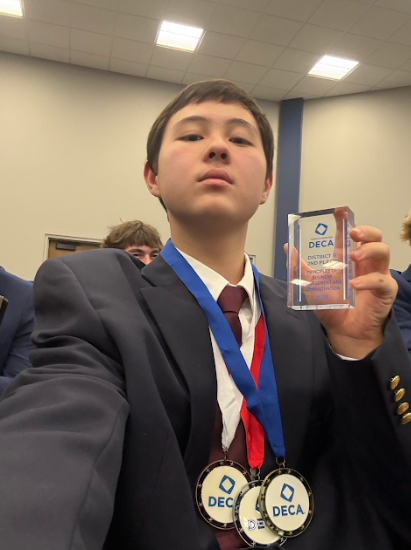
Xavier Swift holds up his medals after placing in the top ten in roleplay, top ten test score, top ten overall, and the DECA glass for placing second overall in the district competition. Photo credit: Xavier Swift
Participating in DECA involves navigating both high-stakes competitions and valuable networking skills.
“Everyone is there for a similar reason, and everyone wants to meet other people. And obviously everybody wants to win,” said Morgan. “Just being able to talk to people who are also interested in talking to you and seeing what people want to do after high school is just a fun way to meet people, while also competing.”
As competitors advance through district and state-level competitions, the number of participants increases, making preparation and dedication essential to succeed.
“Each event had at least 50 students,” said Swift. “If you want the DECA glass, you have got to try for it. Make sure to practice presenting to people and also just do practice tests.”
Beyond the competitive atmosphere and the pressure to succeed when performing, DECA offers students the chance to make memories and build friendships.Whether students join to strengthen their public speaking, explore future career opportunities, or compete against other students within our state, DECA offers experiences that extend far beyond business presentations and exams.
“My biggest takeaway is probably how DECA helped me improve thinking on my feet,” said Morgan. “Competing is nerve-wracking, and learning how to be calm in a not-so-calm environment is a good skill to have. Going in and talking for ten minutes about something you just learned another ten minutes ago is a hard skill to master. Trying to think quickly and coming up with creative ideas to try and be memorable is a great skill DECA has taught me.”


Comments